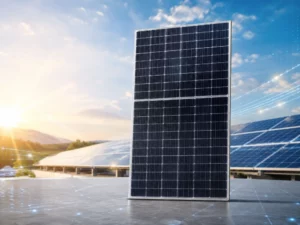
Put two solar panels under the same sunlight and they may still deliver very different output from the same amount of roof space. Solar panel efficiency is one reason. Panel size, rated wattage, heat, shade, string layout, and inverter limits can change the result just as quickly once the modules are installed.
That distinction matters when space is already spoken for. A commercial roof may have HVAC units and access lanes to work around. A telecom site may only have room for a compact array. An off-grid system has another constraint: the panels still have to match the battery bank, inverter, and daily load. In each case, chasing the highest efficiency number on a datasheet is less useful than checking how much dependable power the chosen module can deliver within the actual system.
What Does Solar Panel Efficiency Really Tell You?
On a datasheet, solar panel efficiency gives a quick indication of how effectively a module uses its surface area. A module with a higher efficiency rating can turn a larger share of the sunlight falling on the panel into electricity under the stated test conditions.
That becomes useful when the available mounting area cannot simply be expanded. A factory roof crowded with equipment, a residential roof with an awkward shape, or a remote communications site may have a fixed amount of usable space. In those cases, getting more rated output from each square meter can make the array easier to size.
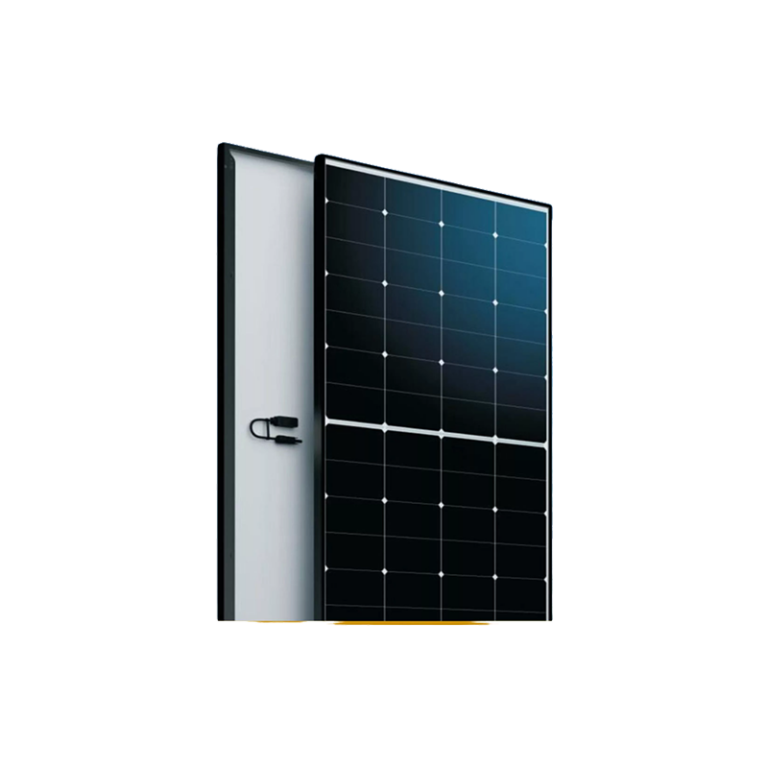
The finished module also deserves more attention than the cell technology alone. A solar cell is only one part of the product that reaches the site. Glass, encapsulation, frame construction, internal connections, sealing, and the junction box all become part of the working solar module. Poor execution in those areas can undermine an otherwise good cell.
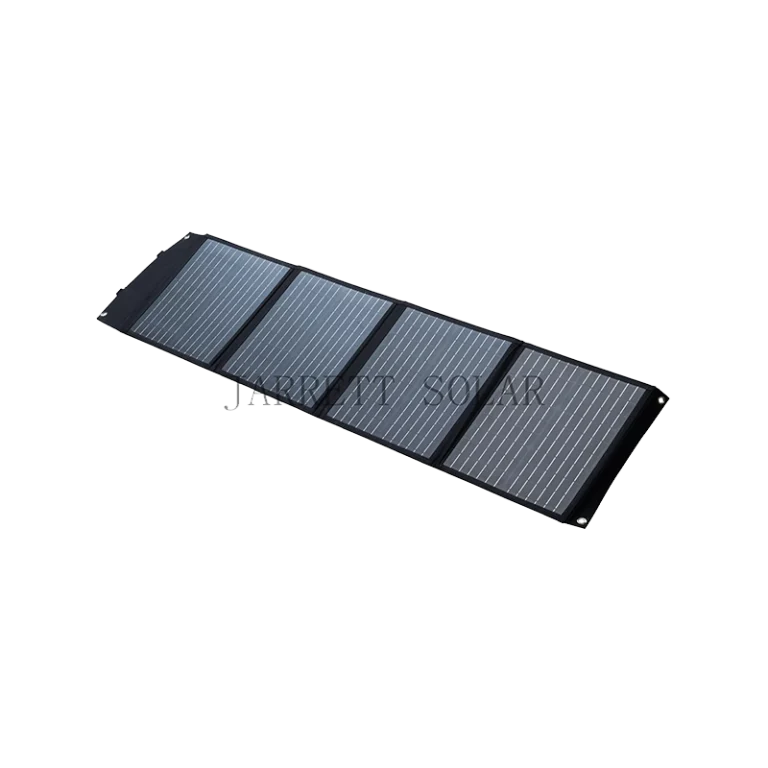
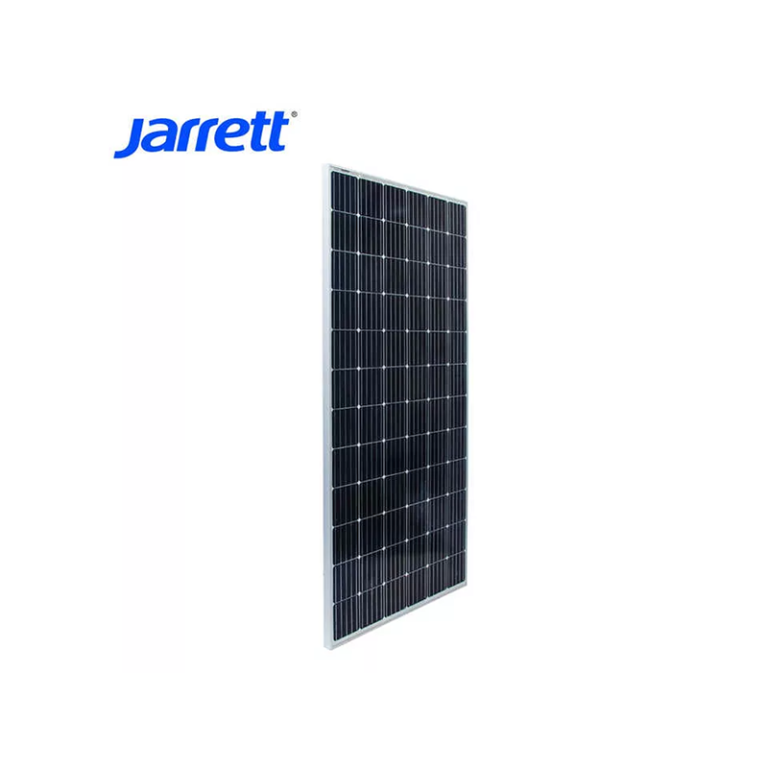
Jarrett’s JAR monocrystalline solar panels give buyers room to choose around the project instead of around a single headline wattage. The JAR range includes models from 50W through 350W using Grade A monocrystalline silicon cells. Smaller outputs can make sense for remote monitoring, mobile equipment, RV or marine use, while larger modules are easier to build into residential, agricultural, telecom, and other off-grid arrays.
For projects that need this type of flexibility, the Jarrett monocrystalline solar panel range can be compared by wattage, voltage, panel size, and the equipment the array will ultimately supply.
Can a More Efficient Solar Panel Still Produce Less Power?
Yes. Efficiency tells you how well a panel uses its area; wattage tells you the rated power of the complete module. Those two numbers are connected, but one cannot replace the other.
Consider a physically large 550W solar module beside a smaller panel with a strong efficiency figure. The larger module may still have the higher total rated output because it has more active area. If roof space is the main constraint, efficiency becomes especially valuable. If there is plenty of mounting area, overall wattage, electrical configuration, installation cost, and system design can carry more weight.
This is why a useful solar module comparison needs more than one figure from the front of the datasheet.
| Specification | Why It Matters on a Project |
| Module efficiency | Shows how effectively the available panel area is being used |
| Maximum power | Indicates rated module output under standard test conditions |
| Module dimensions | Shows how much roof or mounting area each panel occupies |
| Vmp and Imp | Helps match the operating point of the array with the inverter |
| Voc and Isc | Matters when checking string and protection limits |
| Temperature range | Indicates the environmental range for which the module is specified |
| Maximum system voltage | Affects how the panels can be arranged electrically |
| Long-term performance | Helps buyers judge how output is expected to hold up over service life |
On a roof where usable space is tight, a more efficient module can place more capacity within the same footprint. The priorities can change for a ground-mounted array, where site area, racking, cable runs, string design, module pricing, and other balance-of-system choices all affect the outcome.
Why Do Monocrystalline Solar Panels Work Well in Limited Spaces?
Monocrystalline solar panels are often selected for projects that need dependable output from a compact array and want to make efficient use of each installed panel area.
Jarrett’s JAR monocrystalline range covers multiple power levels rather than forcing every project into one module format. Smaller modules can suit mobile, recreational, communications, monitoring, and distributed applications, while higher-wattage products can support larger commercial, industrial, and utility-oriented projects.
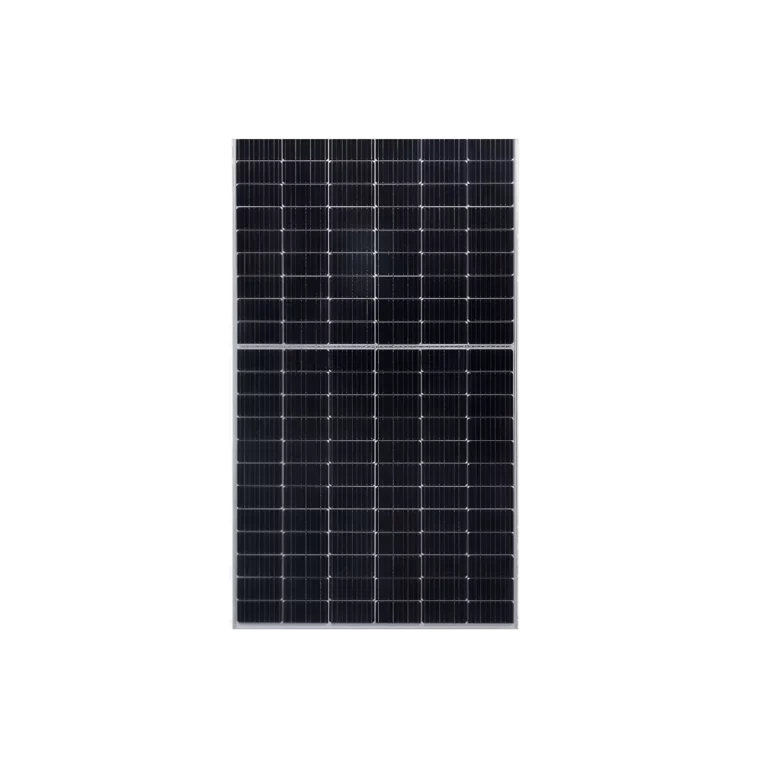
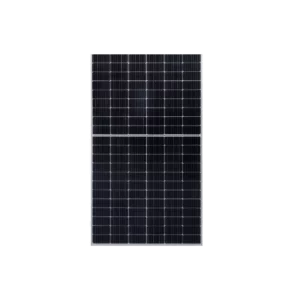
The JAR-550W is one example. It uses Grade A monocrystalline silicon cells and has a rated maximum power of 550W. Its electrical specifications include:
- Maximum power: 550W
- Peak power voltage: 41.95V
- Peak power current: 13.12A
- Open-circuit voltage: 49.5V
- Short-circuit current: 13.98A
- Maximum system voltage: DC 1500V
- Maximum fuse current: 25A
- Operating temperature range: -40°C to +85°C
These figures matter because a project designer needs to know more than the nameplate wattage. String length, inverter input limits, operating current, expected temperature, and cable arrangement must all fit together.
The Jarrett 550W monocrystalline solar panel provides a useful reference for buyers assessing higher-power photovoltaic installations.
What Can Reduce Solar Panel Output After Installation?
Even a high-efficiency solar module will not produce its rated maximum output continuously in normal operation.
Several site conditions change actual generation.
Temperature
Solar modules are exposed to substantial heat during outdoor operation. Electrical output can change as cell temperature rises, which is why thermal behavior and operating temperature limits should be checked when choosing a product for hot regions.
Jarrett’s JAR monocrystalline series and JAR-550W are specified for operating temperatures from -40°C to +85°C, allowing the modules to serve projects across a broad range of climates.
Shading
Partial shading can reduce the amount of sunlight available to cells. Trees, nearby buildings, roof structures, antennas, equipment, or other panels can create shadows during different parts of the day.
A strong module cannot compensate for poor array placement. Site layout remains part of the efficiency equation.
Orientation and Tilt
The orientation and tilt of a module affect how much solar radiation reaches its surface over the day and year. The best arrangement varies with site location and project design.
Dust and Surface Conditions
Dust, dirt, leaves, and other surface contamination reduce the light reaching the cells. Regular inspection and appropriate cleaning can therefore affect long-term generation.
Electrical Mismatch
A high-efficiency panel paired with the wrong inverter, poor string configuration, unsuitable cable sizing, or other system mismatches may not deliver its expected value.
This is one reason a complete photovoltaic system should be considered as a system rather than as a collection of independent components.
How Should Buyers Compare a High-Efficiency Solar Module?
Start with the actual project rather than the headline wattage.
For a commercial rooftop, first map the area that can actually receive modules, then size the capacity around that limit. Off-grid projects should start with daily consumption, battery storage, inverter demand, and local solar availability. At telecommunications and remote-monitoring sites, dependable output and reduced servicing may matter more than the maximum nameplate capacity.
A practical module review should cover at least six areas:
- Power requirement — How many watts or kilowatts must the array provide?
- Available installation area — Is roof or mounting space limited?
- Electrical compatibility — Do Vmp, Voc, Imp, and Isc fit the inverter and string design?
- Climate — Will the module operate in high heat, cold conditions, dust, moisture, or other challenging environments?
- Mechanical reliability — Are the frame, glass, sealing, and junction box appropriate for the project?
- Long-term project support — Can the supplier assist with design, integration, testing, logistics, commissioning, and after-sales requirements?
Jarrett’s JAR series uses anodized aluminum frames, tempered glass, and IP65-rated junction boxes, while the 550W model is also designed around a DC 1500V maximum system voltage. The range can therefore be considered across residential, commercial, industrial, agricultural, telecom, remote, and utility-related applications rather than being limited to one installation type.
Suggested supporting official product image:
https://www.zhejiangjarrett.com/wp-content/uploads/2026/05/JAR-50W-100W-150W-200W-250W-300W-350W-600×600.png
Why Does Supplier Capability Matter as Much as Panel Efficiency?
A module specification is only useful when it can be translated into a workable photovoltaic system.
Zhejiang Jarrett Solar Technology Co., Ltd. covers solar modules, controllers, inverters, lithium batteries, gel batteries, energy storage products, solar streetlights, solar water pumps, portable power supplies, and complete photovoltaic systems. For projects involving more than the panel itself, this makes it easier to look at component matching instead of sourcing every major part in isolation.
Jarrett’s project workflow can extend from consultation and solution design through production, supply, installation, commissioning, operation, and maintenance. Site conditions, module layout, electrical configuration, and system integration can therefore be considered before equipment reaches the installation stage.
Production checks also matter here. Jarrett includes EL inspection, power testing, and weather-related testing before shipment. A high efficiency figure is much less useful if module consistency, electrical integrity, or physical construction cannot hold up once the panels are installed.
Teams specifying a full PV system can explore Jarrett Solar photovoltaic products and system capabilities before deciding how the modules, charge controllers, inverters, batteries, and loads should be matched.
Where Does Higher Solar Panel Efficiency Offer the Most Value?
High-efficiency modules are most relevant where usable mounting area is the limiting factor.
Commercial and industrial roofs commonly lose space to HVAC units, maintenance corridors, fire-clearance requirements, and structural restrictions. In those cases, obtaining more rated capacity from the remaining roof area can be an important advantage.
Telecommunication and monitoring sites frequently need reliable generation in compact remote locations. Space and maintenance access can both be limited.
Off-grid installations depend on balancing PV generation with batteries and loads. A well-sized array can improve daily charging performance without requiring excessive mounting area.
Agricultural systems may use photovoltaic generation for water pumping, monitoring, refrigeration, lighting, and other remote loads.
Residential projects can benefit when a household wants greater solar capacity but has a relatively small usable roof.
The important point is to match the solar module to the project. A 140W, 280W, 350W, or 550W module may each be the better choice in a different installation.
What Should You Ask Before Ordering Solar Panels?
Before placing an order, ask the supplier for the information needed to validate both the module and the complete system.
Confirm:
- Rated module power
- Cell technology
- Vmp, Imp, Voc, and Isc
- Maximum system voltage
- Fuse rating
- Module dimensions
- Temperature range
- Junction-box protection
- Relevant quality or compliance documents
- Warranty terms
- Inverter compatibility
- Expected string arrangement
- Packaging and logistics requirements
- Installation environment
- Required system integration support
For buyers developing a complete PV installation, providing the supplier with the site, target system capacity, available area, destination market, inverter requirements, and intended application can produce a much more useful recommendation than asking for “the most efficient panel.”
If you already have a roof layout, load target, or project specification, send your solar project requirements to Jarrett for module and photovoltaic system evaluation.
Conclusion
Solar panel efficiency matters most when the available installation area has to work harder. It helps show how effectively a module uses its surface, but it cannot answer every project question on its own. Wattage, module dimensions, operating voltage, temperature, shading, array layout, inverter limits, and long-term performance still shape the result seen on site.
Jarrett’s monocrystalline range gives projects several ways to approach that balance. Lower-wattage JAR modules can fit smaller or distributed applications, while the JAR-550W provides a higher-output option with a DC 1500V maximum system voltage and an operating temperature range from -40°C to +85°C.
The better choice is therefore not automatically the panel with the biggest efficiency figure. It is the module that fits the available space, electrical design, site conditions, and expected load while remaining compatible with the rest of the photovoltaic system.
FAQs
Q1:Does a higher-efficiency solar panel always produce more electricity?
A1:Not necessarily. Efficiency shows how effectively a panel uses the sunlight falling on its available area. Total electricity production still depends on module size, rated wattage, sunlight conditions, temperature, shading, orientation, and the way the array is designed.
Q2:Are monocrystalline solar panels suitable for commercial projects?
A2:Yes. Monocrystalline solar panels can be particularly useful where a commercial project needs substantial installed capacity from a limited roof area. Jarrett offers several monocrystalline wattage options, including a 550W model for projects requiring higher module output.
Q3:What specifications should I check besides solar panel efficiency?
A3:Check maximum power, Vmp, Imp, Voc, Isc, module dimensions, maximum system voltage, operating temperature range, junction-box protection, warranty, inverter compatibility, and the actual installation conditions. Looking at these specifications together gives a much clearer picture than comparing efficiency alone.