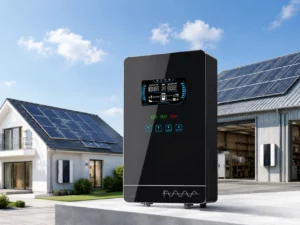
A 3KW and a 5KW solar hybrid inverter can both work well. The better choice depends on the real load at the site.
Start with what needs to run at the same time. A small home, shop, field office, or simple off-grid site may stay far below 5KW for most of the day. In that case, a 3KW hybrid inverter may already do the job. Extra output may simply sit unused.
A 5KW hybrid inverter becomes more useful when several loads overlap. A pump may start while lights, computers, refrigeration, and other equipment are already running. A workshop may add tools during busy hours. A shop may install more refrigeration later. These changes can raise power demand quickly.
The inverter also needs to match the PV array and battery bank. So the kW rating is only one part of the choice.
What Really Changes Between a 3KW and 5KW Hybrid Inverter?
The first difference is AC output. A 5KW inverter can support more load than a 3KW inverter.
That does not tell the whole story.
PV input may be different. Battery voltage can change between models. Charging current, MPPT range, protection, and working modes may also vary.
This means a 3KW unit and a 5KW unit are not always the same product with a different power number. They may need different PV strings or battery setups.
Why is continuous load only the starting point?
Do not add every appliance and assume all of them run together.
Real use is usually different. Lights may stay on for hours. A refrigerator switches on and off. A pump may work for ten minutes and then stop. Computers may stay on all day, while workshop tools are only used when needed.
The useful number is the load during the busiest period.
A site may own more than 5KW of electrical equipment but rarely use more than 2KW at one time. Another site may reach nearly 3KW every afternoon. Those two projects do not have the same inverter requirement.
If normal demand stays well below 3KW, a 3KW hybrid inverter can still be a sensible choice. When the load often gets close to that limit, a 5KW hybrid inverter gives the system more spare room.
That room can also help if more equipment is added later.
How can startup demand change the answer?
Motors make the calculation less simple.
A water pump may use modest power after it starts. At the first moment of startup, however, it may ask for much more. Refrigeration compressors, air conditioners, and some workshop machines can behave in the same way.
That short surge matters.
An inverter may look large enough when only normal running watts are added together. Then a motor starts and the load suddenly rises.
If there is very little spare capacity, the inverter may shut down or the user may have to turn other equipment off first.
For this reason, the load list should show more than running watts. It should also show which devices contain motors or compressors.
When Is a 3KW Hybrid Inverter the Better Fit?
A 3KW hybrid inverter is often a good match for a smaller system with steady loads.
This may include a small house, a basic shop, a remote work area, a telecom support site, or a light off-grid installation.
The building itself is not the main issue. Real power use matters more.
Why can smaller systems be easier to match?
A smaller inverter often works naturally with a modest PV array and battery bank.
That can help when roof space is limited. It can also make sense when the project budget is tight or daily energy use is low.
Bigger equipment does not always produce a better system.
For example, if a site usually runs at 1.5KW to 2KW, a much larger inverter may spend most of the day with unused capacity. Part of the budget could instead go toward batteries, PV modules, or other parts of the installation.
Battery size also matters. A large inverter connected to a small battery may support a heavy load, but perhaps only for a short time.
The same applies to solar input. A larger inverter does not create more solar energy by itself.
Why should buyers check the actual model rating?
“3KW” is often used as a size group, not an exact output value.
One product may be rated at 3.0kW. Another may be 3.2kW or 3.6kW.
So the exact model still needs to be checked before ordering.
Look at rated output first. Then check PV voltage, MPPT range, battery voltage, charging current, waveform, and protection functions.
Jarrett offers inverter products across several power ranges. Buyers can compare the Jarrett inverter range with the real site load, battery voltage, and PV setup instead of choosing only from a general 3KW or 5KW label.
When Does a 5KW Hybrid Inverter Make More Sense?
A 5KW hybrid inverter becomes more useful when the site has short periods of heavier power demand.
The site does not have to be large.
A workshop may have a low basic load. Then several tools and a compressor start together. A farm may run lighting and communication equipment with little difficulty until the water pump starts.
A shop may see the same jump when refrigeration, lighting, and office devices overlap.
Those busy periods can matter more than average daily power use.
Can a larger inverter make daily operation easier?
In some projects, yes.
With a smaller inverter, users may have to think about which devices can run together. They may need to stop one machine before turning on another.
That can be acceptable in a small backup system. It is less convenient in a business where equipment needs to work when required.
A 5KW hybrid inverter gives more room during busy periods. The battery bank and PV array still need to support the same demand.
This can be useful in shops, offices, workshops, farms, and larger off-grid homes.
The busiest hour often tells more than the average hour.
Why should expansion plans be considered now?
Electrical demand can change after installation.
A shop may add another refrigerator. A workshop may buy new tools. A farm may install a larger pump. An office may add computers or communication equipment.
If those changes are already planned, include them in the first sizing check.
A system with almost no spare capacity on day one can become too small quickly.
Some spare room is useful. Too much is unnecessary. The aim is to leave enough space for realistic growth.
Which Specifications Matter More Than the KW Label?
Rated output matters, but it is not enough.
The inverter must accept the planned PV input. It also needs to work with the chosen battery.
Charging current, MPPT range, output waveform, monitoring, and protection functions all need to fit the project.
How should the PV array match the MPPT window?
An MPPT controller works inside a set voltage range.
The PV strings need to stay inside that range during normal use. They also need to remain below the inverter’s maximum PV input voltage.
Module voltage can change with temperature. For that reason, PV string design needs some margin.
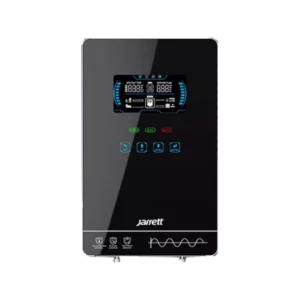
Jarrett’s JAXM series combines the inverter and MPPT controller in one unit. The series includes 4.5KW and 6.5KW versions and supports a 120–500VDC PV input range.
The units provide pure sine wave output and a power factor of 1.0. LCD touch controls are included. They can also operate with or without a battery.
This allows project teams to check AC output, PV input, battery use, and control functions within one system.
Buyers can review the JAXM 4.5KW and 6.5KW inverter system when looking for an integrated off-grid inverter and MPPT setup.
How should the battery bank be matched?
Battery capacity is only one part of the battery choice.
A battery may store enough energy for the expected backup time. Even so, it can still be unsuitable if the voltage does not match the inverter.
Current matters as well.
The battery needs to provide enough discharge current when the inverter is carrying a high load.
For lithium systems, BMS communication can also be important. The battery and inverter need to communicate in a way supported by the system.
Jarrett’s wall-mounted LiFePO4 range includes 48V and 51.2V versions. Capacity options include 100Ah, 200Ah, and 300Ah.
The batteries support communication functions and parallel expansion. This gives installers and distributors more choice when they need to balance inverter power, stored energy, and backup time.
The Jarrett lithium battery range can be checked together with inverter voltage, current needs, communication requirements, and expected runtime.
Why does pure sine wave output matter?
Some loads are easy for an inverter to power. Others are more sensitive.
Simple lighting is one case. Computers, communication equipment, motors, and electronic control systems can be more demanding.
For these loads, pure sine wave output is often a better fit. Its waveform is closer to normal utility AC power.
So inverter selection is not only about how many watts the unit can deliver. The type of output also needs to suit the equipment connected to it.
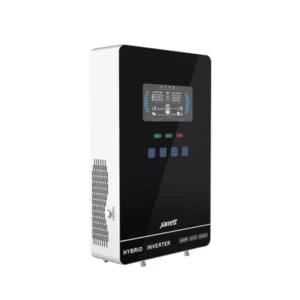
Jarrett’s off-grid hybrid inverter control units include integrated inverter and solar-control products for residential, commercial, industrial, and remote-power projects.
How Can You Size the Inverter Without Guessing?
Start with what is happening at the site.
Do not begin with a product model and then try to make the project fit it.
What belongs in the simultaneous-load list?
Write down the main equipment first.
Include lighting, refrigerators, pumps, air conditioners, computers, tools, communication equipment, and other important loads.
Then mark which ones may run at the same time.
It also helps to split loads into two groups.
The first group is essential equipment. These loads need to keep running.
The second group is optional equipment. These devices can be turned off during backup operation if necessary.
This can reduce inverter and battery requirements without affecting the most important loads.
Why should power and energy be calculated separately?
Power and energy answer different questions.
Inverter kW tells you how much load can run at one moment.
Battery kWh tells you how long that load can keep running.
PV capacity tells you how much solar energy can be collected and how quickly the battery can recharge.
A 5KW inverter can run a heavy load. With a small battery, however, that load may only run for a short time.
The opposite can happen too. A large battery may store plenty of energy, but a small PV array can take much longer to recharge it.
The three parts need to make sense together.
Which site conditions can affect the final design?
Real projects are rarely as neat as a sizing chart.
Cable length can matter. Ambient temperature can affect equipment. PV voltage changes with conditions. Battery discharge limits may reduce the power available to the inverter.
User habits can change the load as well.
Jarrett supplies solar modules, controllers, inverters, lithium batteries, and other photovoltaic products. The company also supports system design, installation, commissioning, and operation and maintenance.
For distributors, installers, EPC teams, and project buyers, this allows the inverter to be considered together with the rest of the system instead of as an isolated product.
What Should You Send Before Requesting an Inverter Quote?
A useful RFQ does not need to be long.
Start with the expected simultaneous load.
List pumps, compressors, air conditioners, or other devices with high starting demand. Add the required backup time.
Then provide the planned PV capacity, battery type, and battery voltage.
Local AC voltage and frequency should also be included. If remote monitoring is needed, mention that too.
For an existing system, send the current inverter model, PV array, battery bank, and the new equipment being added.
That information can show where the real limit is.
Sometimes a larger inverter is needed. In other cases, the battery or PV array may be the part that needs to change.
Buyers can discuss inverter sizing requirements with Jarrett and provide the load, PV, and battery details together.
A clear project brief gives the technical team a better starting point for choosing the system.
Conclusion: Which Inverter Size Fits Your Project?
A 3KW hybrid inverter can work well for a smaller installation with moderate loads and little planned growth.
A 5KW hybrid inverter is more useful when several loads overlap, motor-driven equipment is involved, or the site may add more equipment later.
Neither size is always better.
The final choice should come from the complete electrical system. AC load, startup demand, MPPT voltage range, PV capacity, battery voltage, BMS communication, charging current, and output waveform all need to fit together.
For buyers, installers, and distributors, this gives a better result than choosing an inverter from the kW number alone.
FAQs
Q1: Is a 5KW hybrid inverter always better than a 3KW model?
A1: No. A 5KW hybrid inverter is useful when the site really needs the extra output. If the load is modest and the PV array and battery bank are small, a 3KW hybrid inverter may be the better fit.
Q2: Can I use a 5KW inverter with a small battery bank?
A2: In some systems, yes. But the battery still needs the correct voltage and enough discharge current. A small battery may also provide only a short backup time under a heavy load.
Q3: What information matters most when choosing a hybrid solar inverter?
A3: Check the simultaneous load first. Then look at startup demand, PV voltage, MPPT range, battery voltage, backup time, output waveform, and future expansion. These details give a clearer answer than inverter power alone.