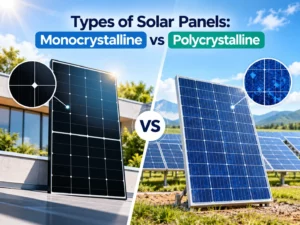
Two quotations can show the same module wattage and still produce very different installations. One plan fits neatly between roof vents and walkways. The other needs longer mounting rails, more cable, and a string layout that pushes the inverter outside its preferred voltage window. That is why types of solar panels have to be compared against the actual project, not as a simple league table.
Monocrystalline and polycrystalline modules are the main choices in many Jarrett projects, but they are not the only formats on the market. PERC, thin-film, bifacial, flexible, and folding products each solve a more specific problem. The first job is to separate those technical differences from marketing labels.
Start With the Space You Can Actually Use
The Roof Is Not the Array
The physical roof area is only the beginning. Usable space shrinks around parapets, vents, HVAC equipment, access paths, fire requirements, and shaded zones. A wide roof can become a narrow strip once the installer accounts for maintenance and safe movement.
Sketch the usable area before comparing modules. Then place candidate module dimensions into that space. A slightly wider panel can reduce the number of rows or change the mounting pattern. A longer module can affect rail spacing and how installers move it into position. Those details often matter more than a small difference in unit efficiency.
Ground-mounted projects change the same calculation. Setbacks, access roads, drainage, cable runs, and tracker or fixed-tilt choices all shape the usable array. The best module is the one that works inside the real boundary, not the largest module on the price list.
Module Count Changes More Than Cost
A higher-output module may reduce the number of units required. That can shorten rails, lower the number of connectors, and simplify the labor plan. It can also change string voltage, current, and the amount of DC cable needed.
The opposite happens with a lower-output design. More modules may mean more mounting hardware, more connections, and more inspection points. The module price may be lower, but the delivered project cost can move in the other direction.
Count the complete bill of materials, not just panels. Compare module quantity, mounting, cable, connectors, protection, labor, freight, and the effect on installation time. A layout that looks cheap at the module level can become expensive once the rest of the system is included.
What Mono and Poly Really Change
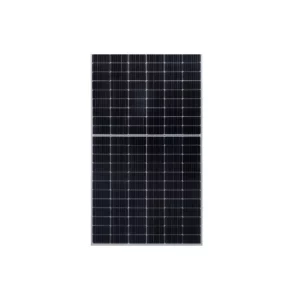
Monocrystalline Modules: More Power in a Tight Space
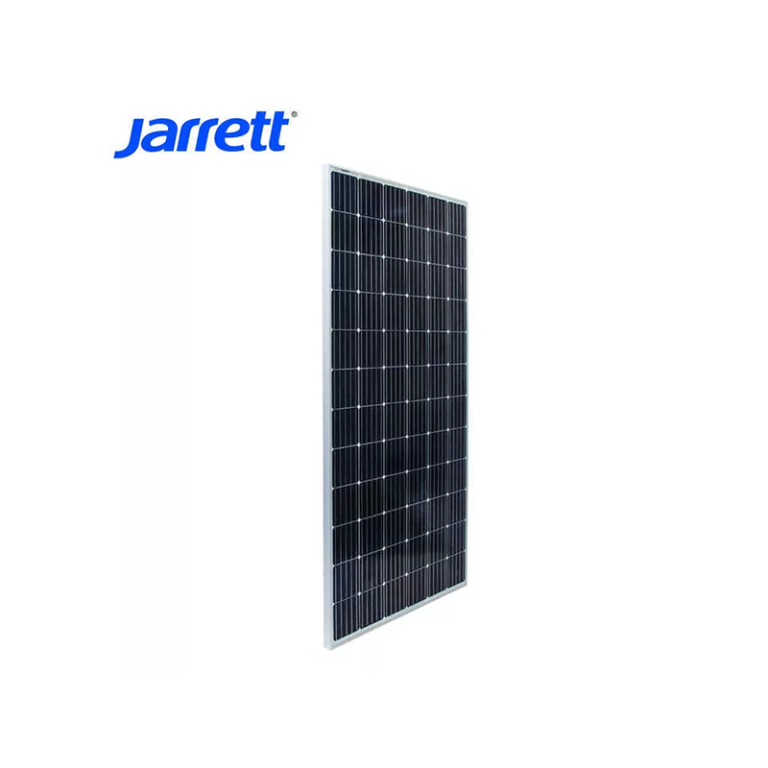
Monocrystalline modules use a single-crystal silicon structure and are often selected when usable space is limited. Their higher power density can help a commercial roof, vehicle, remote equipment cabinet, or small ground array meet the target with fewer modules.
That advantage has limits. Module dimensions, voltage, current, temperature behavior, and mounting requirements still have to match the rest of the design. A high-efficiency panel cannot rescue an undersized cable, incorrect string length, or inverter that does not accept the array voltage.
For space-constrained projects, Jarrett‘s monocrystalline solar panels offer a practical family to compare. Pull the datasheet for the exact model and use its own wattage, dimensions, electrical values, and warranty terms.
Polycrystalline Modules: Lower Module Cost, More Area
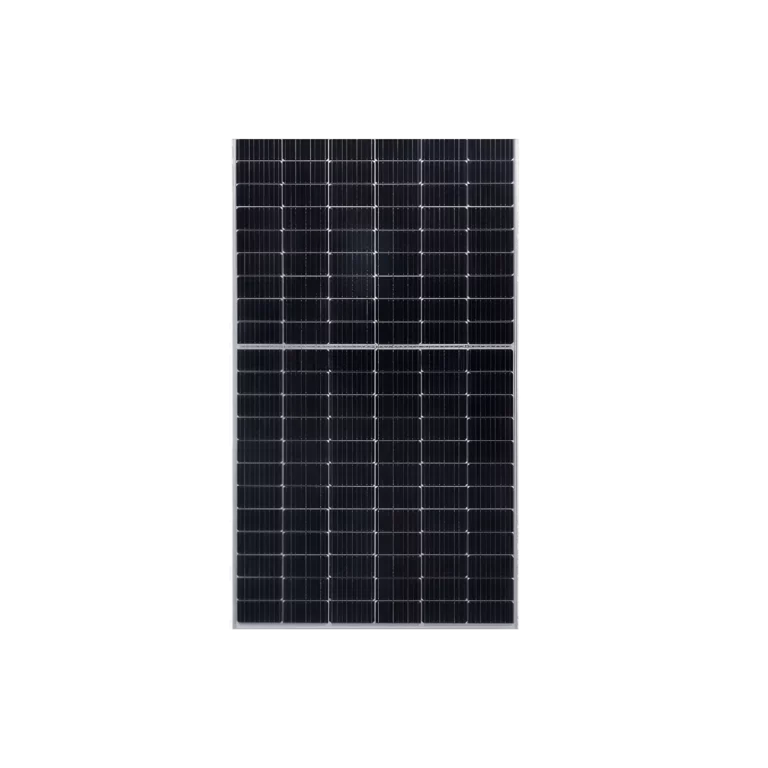
Polycrystalline modules use multiple silicon crystals. They are often considered when module cost carries more weight and the site has enough area to support a larger array.
That trade-off works only if the layout remains practical. More modules can add mounting rails, cable, connectors, labor, and future inspection work. Soil, wind, service access, and cable routing may also become harder as the array grows.
Treat polycrystalline as a system option, not just a cheaper panel. Check the model against the inverter or controller, the battery or grid interface, and the site conditions. If those pieces do not fit, a lower module price is not useful.
Do Not Stop at the Module Label
Temperature, Degradation, and Warranty Follow the Exact Model
Two modules can share a cell type and still behave differently. Temperature coefficients affect voltage and output as the module heats and cools. Construction affects moisture resistance and mechanical strength. Cell processing and factory controls influence how consistently the modules perform together.
The warranty is equally specific. Read the performance terms, exclusions, and required installation conditions for the exact model. Do not move a lifetime, degradation, or temperature claim from one panel family to another.
This is also where supplier evidence matters. A datasheet, test record, packaging specification, and model number do more for the project than a broad statement that one technology is better. Keep those records with the approved bill of materials.
String Voltage and Inverter Fit Can Reject a Good-Looking Panel
A module that looks attractive in the quotation can fail the electrical check. String voltage rises when modules are cold, current changes with irradiance and temperature, and the inverter has a defined input window. The array must remain inside that window across the expected operating range.
Check maximum system voltage, open-circuit voltage at the cold condition, operating voltage, current limits, connector rating, and conductor size. If batteries or storage are part of the project, the charging source and system architecture need the same review.
Panel choice and inverter choice belong in one design conversation. Switching modules after the inverter has been selected can force changes to the string layout, protection, and cable plan.
Special Formats Have Different Jobs
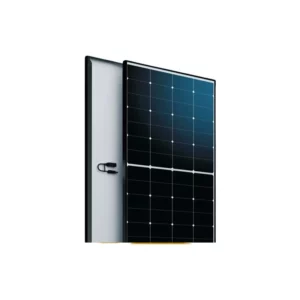
Thin-Film, PERC, and Bifacial: Verify Before Specifying
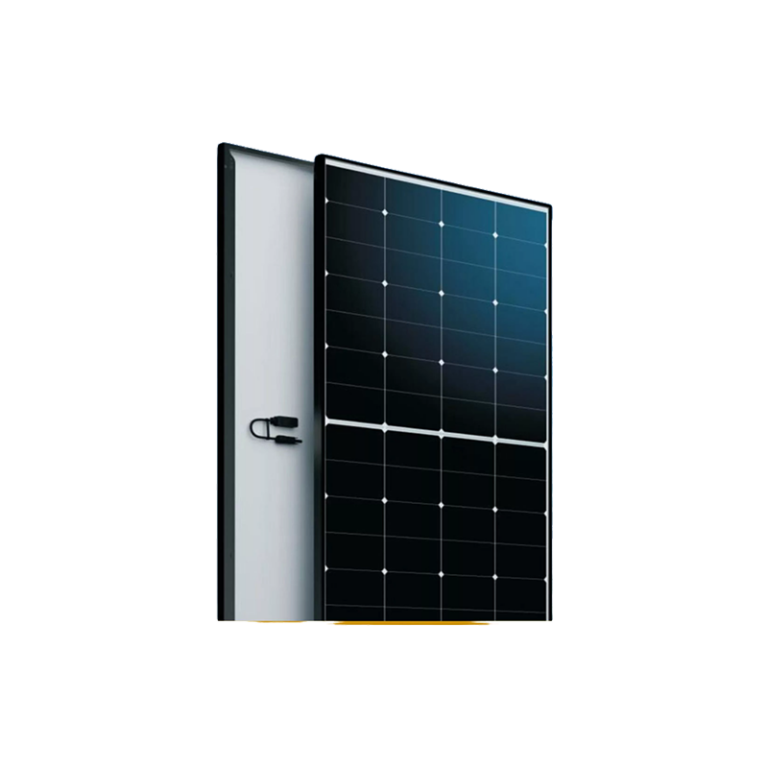
Thin-film, PERC, bifacial, and flexible modules are not interchangeable upgrades. Thin-film products can suit lightweight or curved installations. PERC and other cell structures change how a crystalline module captures and transports energy. Bifacial designs add rear-side exposure and require mounting and albedo conditions that support the expected benefit.
Availability is the next question. Do not assume that a product type described in an industry guide is part of the current Jarrett range. Confirm the exact model, datasheet, warranty, test evidence, mounting requirements, and supply quantity before it enters the approved design.
If the supplier cannot document the specialized format, leave it outside the bill of materials. A clear product boundary is better than a quotation that promises a technology the factory does not supply.
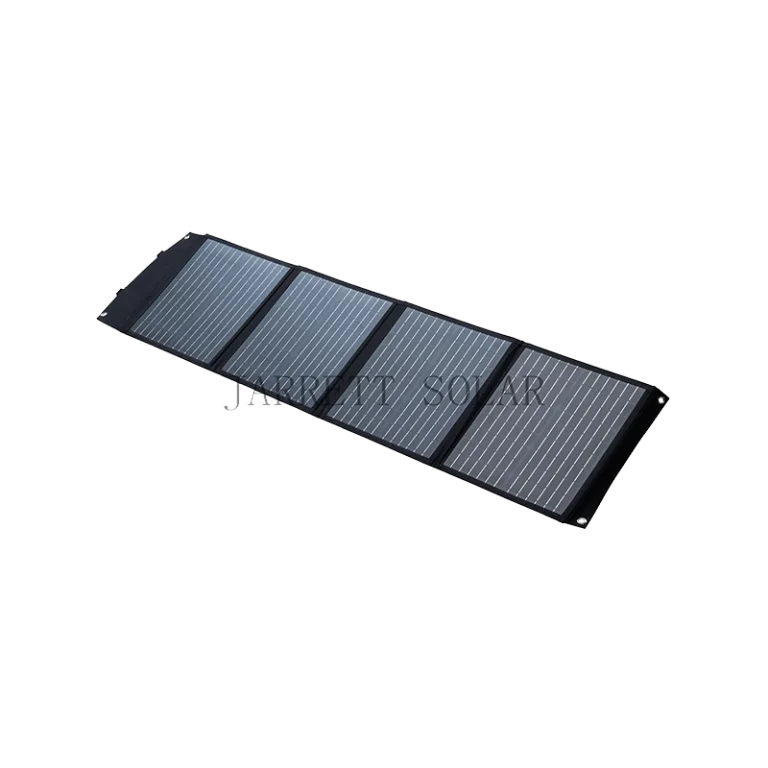
Folding Panels: Portable Means a Different Checklist
Folding panels solve transport and deployment problems. They are used for camping, field research, emergency power, mobile work, and other situations where a fixed array is impractical.
Their checklist differs from a rooftop module. Check open and folded dimensions, connector compatibility, weather protection, handling, controller or power-station limits, and realistic daily output. The panel must survive repeated folding and transport, not just produce power on a test bench.
Jarrett’s folding solar panels serve that portable category, while fixed monocrystalline and polycrystalline families support project-based installations.
Match the Type to the Project
Use Layout, Capacity, and Voltage as the First Filters
Start with usable area and target capacity. Estimate the module count for each candidate, then draw the resulting rows, access routes, and cable paths. A type that creates an awkward layout can lose before price is considered.
Next, check the electrical window. Module voltage and current need to fit the inverter or controller, battery or grid interface, protection scheme, and temperature range. String length and conductor sizing should be checked with the same care as module efficiency.
In a Jarrett project, match the solar panel product range to the controller or inverter, battery, and mounting plan as one design rather than as separate purchases.
Compare Delivered Cost and Supply Evidence
Price per watt is only one line in the comparison. Add mounting, cable, connectors, labor, freight, spare parts, and the cost created by a difficult layout. That total shows which module type actually fits the budget.
Supply evidence closes the review. Ask for the model number, datasheet, warranty, packaging specification, testing records, and available quantity. If the model changes later, check the replacement against the original electrical and mechanical design.
Jarrett combines panel supply with system design and project support. The panel type can therefore be reviewed with the complete installation instead of as an isolated purchase.
Conclusion
Panel selection gets easier when the project is treated as a set of constraints. Monocrystalline modules often fit space-limited work. Polycrystalline modules can make sense when area is available and delivered cost drives the decision. Thin-film, PERC, bifacial, and folding products need separate checks because they serve different technical or application needs. Start with layout, capacity, and voltage, then compare cost, supply, and quality evidence. Send the site layout, target capacity, preferred module type, and delivery schedule to Jarrett before the panel family is locked.
FAQs
Q1: Which type of solar panel is best?
A1: It depends on the installation. Monocrystalline modules often suit limited space, while polycrystalline modules can work when the site has enough area and module cost is a major concern. Compare the complete layout, electrical design, delivered cost, and supply evidence.
Q2: Are monocrystalline solar panels always better than polycrystalline?
A2: No. Monocrystalline modules usually provide more power per unit of area. Polycrystalline modules can still be the better project choice when space is available and the installed system meets the same electrical and quality requirements.
Q3: Does Jarrett supply thin-film or flexible solar panels?
A3: Jarrett’s confirmed range includes monocrystalline, polycrystalline, and folding solar panels. Check thin-film or other specialized formats against the current official product range before including them in a quotation.