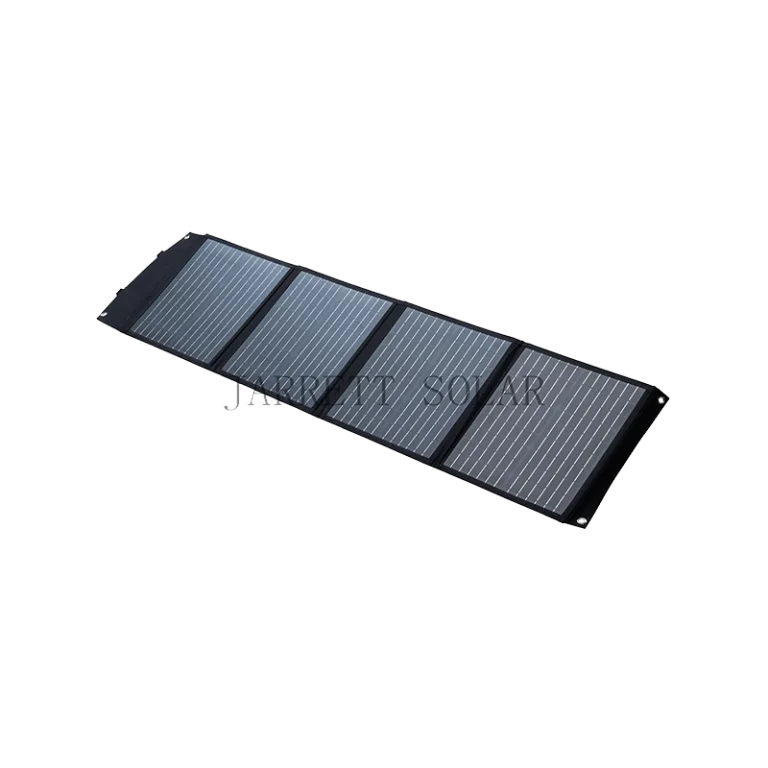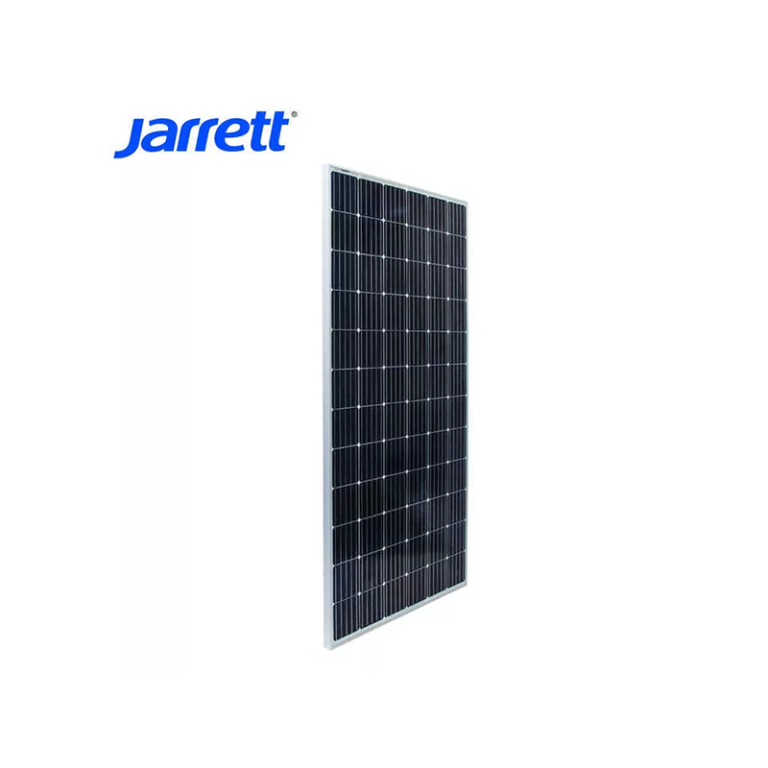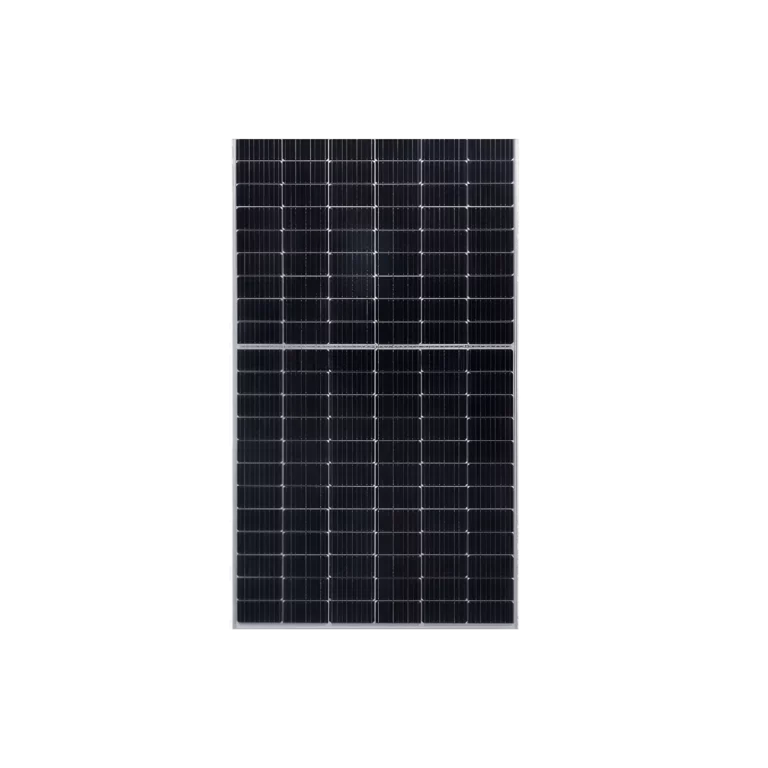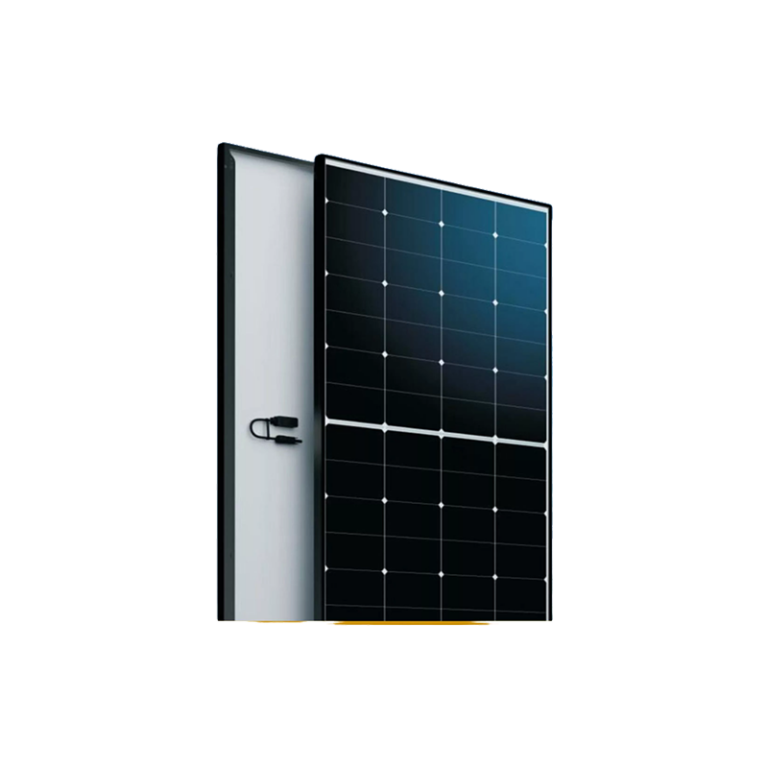
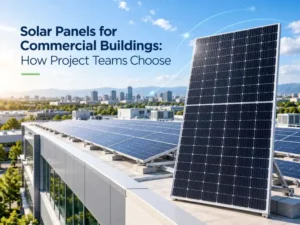
Choosing solar panels for commercial buildings is a project decision, not a product swap. The right module must fit the building’s electricity demand, roof and site conditions, inverter and string design, storage plan, procurement scope, and the way the facility will actually operate. A solar panel system for commercial buildings therefore has to be judged as one integrated project. Starting with a wattage or price ranking usually produces a shortlist that cannot be defended during engineering review.
Jarrett supports industrial, commercial, public-utility, and residential solar project work and provides one-stop PV system solutions covering consulting, design, and system integration. The useful question is therefore not which panel wins in general, but which panel belongs in this project after the building and system inputs are clear.
Start With the Building, Not the Panel
Commercial PV procurement begins with project validation. The U.S. Department of Energy separates this validation into pre-screening, site screening, and financial and regulatory screening. Site screening can include estimated energy consumption and demand, rooftop or ground-mount requirements, weather and site hazards, site access, electrical considerations, utility interconnection, permits, and preliminary system size.
For a building project, that means the panel discussion starts with several practical questions. How much electricity does the facility use, and when is it used? Which loads must be supported during a grid outage? Is the available roof area clear of HVAC equipment, skylights, access routes, and future maintenance paths? Is the structure suitable for the proposed mounting system? Does the utility connection have enough capacity? Are fire, zoning, permitting, or interconnection rules likely to change the design?
These are not administrative details that can be settled after selecting modules. They determine whether the project has enough usable area, how modules can be arranged, what voltage and current the array will produce, how much equipment can be installed, and which project costs are unavoidable. A site with limited usable area may need a different module strategy from a site with abundant space but difficult electrical access.
A useful pre-screen produces a bounded project brief rather than an exact final design. It should identify the annual electricity target, peak demand assumptions, backup objective, available area, structural and electrical constraints, ownership or lease arrangements, target schedule, and the approvals the team still needs. Those inputs keep the panel comparison connected to a real project instead of an assumed one.
Which Panel Specifications Actually Change the Shortlist?
Once the project inputs are known, panel specifications can be sorted into those that materially change the design and those that are mainly supporting evidence. Not every attractive datasheet value deserves equal weight. The shortlist should concentrate on how the module behaves inside the proposed system, under the actual site conditions, and within the procurement and acceptance process. The selected module must also be available within the supplier’s PV product range.
When Does Module Efficiency Matter Most?
Efficiency describes how much rated power a module can produce for its area. It becomes especially important when usable roof or land area is constrained, when the layout has irregular clear zones, or when the project needs more capacity than a lower-efficiency module can reasonably fit. In those cases, a higher-efficiency module can reduce the number of modules, the mounting area, and some balance-of-system complexity.
Efficiency is less decisive when space is plentiful and the same annual energy target can be met with a larger array. It still affects the design, but it should not automatically override electrical fit, operating conditions, quality evidence, warranty terms, logistics, or delivered project cost. A high-efficiency module that creates a poor string match or increases the cost of the approved system is not automatically the better project choice.
This is where module-level information must connect to system behavior. The effect of panel efficiency on power output also depends on temperature, shading, orientation, tilt, surface conditions, and electrical mismatch, so efficiency should not be treated as a standalone ranking number.
Which Electrical and Mechanical Ratings Need to Match the Project?
The next filter is the electrical and mechanical record. Project teams should compare module voltage and current characteristics, temperature behavior, maximum system voltage, connector and junction-box protection, mechanical load information, operating-temperature range, quality controls, certifications, and warranty terms. Each value must be read with its test conditions and model name; specifications should not be transferred from one module to another.
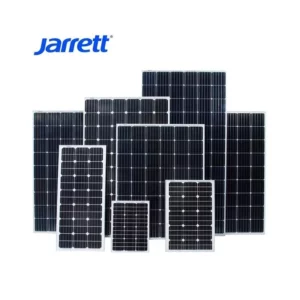
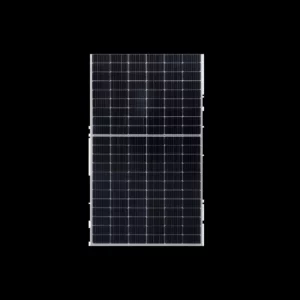
A model-specific comparison is more useful than a generic brand claim. The JAR-550W monocrystalline panel is positioned for utility, industrial, and commercial and industrial high-power off-grid and storage systems. Its published specifications include 550W maximum power, DC 1500V maximum system voltage, 49.5V open-circuit voltage, 13.98A short-circuit current, an IP65 junction box, and an operating range from -40°C to +85°C. These values belong to that model and still require a complete electrical and mechanical design review.
Quality evidence also belongs in the shortlist. The JAR series uses Grade A monocrystalline cells and follows ISO9001 manufacturing controls. Its stated pre-shipment quality process includes EL inspection, power testing, and weathering checks. Those controls can support supplier evaluation, but they do not replace project acceptance criteria, independent testing requirements, or the exact documentation requested in the purchase order.
The practical result is a specification table with three columns: the project requirement, the evidence supplied by each candidate module, and the remaining design or procurement question. That format exposes gaps instead of allowing a strong headline number to hide an unresolved electrical, quality, or warranty issue.
How the Rest of the System Changes the Panel Choice
Panels do not operate alone. A commercial array is part of a system that includes inverters, string and DC protection, grounding, monitoring, mounting, cabling, and sometimes energy storage. Changing the module can therefore change the inverter, protection devices, cable sizing, structural layout, and commissioning plan even when the nominal system capacity stays the same.
How Inverter and String Design Constrain the Module
The inverter defines a DC input window and operating range. The module string must stay within that window across expected temperature conditions, not only at standard test conditions. Voltage rises when modules are cold and can fall when they are hot; current and voltage behavior also affects cable and protection selection. A module that looks suitable on its nameplate may still create an impractical string design.
The project team should compare the module’s temperature coefficients, maximum system voltage, voltage and current at relevant operating points, and the proposed string length against the inverter’s approved input range. The result also has to respect the inverter’s maximum input current, MPPT configuration, start-up voltage, and protection settings. If the inverter is not yet selected, the module comparison and inverter comparison should move together rather than in separate procurement tracks.
A related guide to choosing between 3KW and 5KW hybrid inverters shows why continuous load, starting demand, PV input, battery voltage, and expansion plans all belong in the same decision. The same logic applies at commercial scale: the panel shortlist is only credible when the inverter and string architecture remain feasible.
When Storage Changes the Array and Module Plan
Storage changes the question from energy production alone to energy timing and backup capability. A battery system may shift how much daytime generation the facility can use, how much capacity is needed for critical loads, and whether the array should be sized for daily energy, outage duration, demand reduction, or a combination of goals. It can also introduce separate inverter, protection, ventilation, fire, and space requirements.
The module count may stay the same while the system design changes substantially, or the storage objective may justify a different array size and layout. Either way, the team should test the panel plan against the required backup window and the battery’s usable energy. The same logic appears in 100Ah lithium battery runtime planning: capacity, load, inverter behavior, temperature, and installation limits determine what the stored energy can actually support.
Project specifications can be matched with customized production or allocation of monocrystalline modules, inverters, mounting systems, and distribution cabinets. That system-level supply route is useful when storage or inverter changes must be coordinated with the module plan, but the exact bill of materials still depends on the approved design and selected components.
How Project Teams Estimate Panel Count and Cost
Commercial solar system sizing starts with the annual electricity target or required load. Panel count is an output of that design, not a fixed number for every commercial building. The estimate then considers available area, module rating, expected production, system losses, shading, temperature, orientation, and the chosen inverter or storage architecture. When a building has a large roof but a small daytime load, the economically useful array may be smaller than the roof could physically hold. If the site has a tight roof but a high electricity demand, higher module efficiency or an alternative mounting area may matter more.
The calculation should produce a range and a set of assumptions, not a false precision. Project teams should record the demand profile, the production target, the usable area, the candidate module rating, the design losses, and the backup requirement. That information allows engineering to revise the count without reopening the entire procurement strategy.
Cost follows the same logic. The U.S. Department of Energy’s PV cost model separates installed-system cost into modules, inverters, energy storage, structural balance-of-system, electrical balance-of-system, fieldwork, office work, and other categories. Tax credits and tariffs are treated separately because they can change the final project economics without changing the underlying equipment scope.
When procurement teams discuss solar panels for commercial buildings, cost is often the first comparison point, but the module price alone answers very little. Mounting and roof work, electrical upgrades, interconnection, site access, labor, logistics, monitoring, storage, permits, and project schedule can all alter the total. A lower module price may not produce a lower delivered system cost if it creates a more complex layout, additional electrical work, or more project risk.
Solar panel ROI for commercial buildings is likewise a project-level calculation. It depends on current and future electricity prices, the facility’s consumption profile, the amount of generation used on site, utility rules, incentives, financing, maintenance, replacement assumptions, and the useful life of the complete system. The right deliverable at this stage is a transparent input list and sensitivity range, not a guaranteed payback figure.
What Should Be Ready Before Requesting a Quote?
A useful request for quotation gives the supplier enough context to price a real scope rather than a generic module. Before issuing the RFQ, the project team should confirm:
- the facility’s electricity use and the loads that define the target;
- roof or land area, obstructions, access, and any known structural constraints;
- the planned system type, approximate capacity range, and backup objective;
- grid, off-grid, or hybrid operating requirements;
- preferred or required module, inverter, storage, and mounting characteristics;
- destination market, applicable standards, documentation, and approval requirements;
- expected schedule, delivery location, and commercial terms that affect sourcing;
- the assumptions that remain unresolved so the quotation can identify them clearly.
The RFQ should also state what the supplier must return: a compliant bill of materials, model-specific datasheets, electrical assumptions, scope exclusions, warranty and documentation terms, lead-time assumptions, and any design conditions that still require confirmation. This turns the quotation into a comparison of equivalent scopes instead of a collection of unrelated prices.
Project support can cover consultation and design, production and supply, installation, commissioning, and maintenance. Its consultation process considers electricity needs, roof area, load-bearing considerations, obstructions, and budget. Those inputs are exactly what a commercial RFQ needs to make the panel shortlist traceable to the building and the proposed system.
Conclusion
Commercial panel selection works best as a sequence: validate the building, define the system, compare model-specific evidence, calculate count and cost boundaries, and then request a quotation for a clear scope. Efficiency and wattage matter, but only after the team understands usable area, electrical design, storage needs, site constraints, and the project’s operating objective. The strongest shortlist is the one the project can actually engineer, procure, approve, and maintain. Share the load profile, site conditions, target capacity, system architecture, destination market, and timeline with Jarrett so the next design review can start from complete project inputs rather than an assumed panel count.
FAQs
Q1: How many solar panels are needed to power a commercial building?
A1: There is no fixed count based on building type alone. The number follows annual electricity use, demand profile, available area, module rating, expected production, shading and temperature conditions, system losses, and the chosen inverter or storage architecture. A preliminary count should include those assumptions and be revised as the design develops.
Q2: What affects solar panel cost for commercial buildings?
A2: The quotation reflects module type and count as well as inverters, storage, mounting, structural and electrical work, site access, interconnection, labor, logistics, monitoring, permits, schedule, and documentation. Incentives and tariffs can change the final economics but do not change the physical project scope, so quotations should be compared against the same assumptions.
Q3: Is higher panel efficiency always the better choice?
A3: No. Higher efficiency can be valuable when roof or land area is constrained, but electrical compatibility, operating conditions, quality evidence, warranty, logistics, and complete system cost can matter more when space is available. The panel should be selected for the approved project, not for one specification in isolation.