
A wattage-only quotation leaves four rows empty: maximum-power voltage, open-circuit voltage, socket ratings, and the connector set. What sits behind the order decides which of them matter. Two 12 V banks topped up between site visits need the DC lead and a controller. A phone and a power bank need the sockets and nothing else. Buyers rank such lists on watts, because watts are the number the sheet carries.
Introduction
The four blank rows held the values that decide a foldable solar panel order. The bank path runs on two label voltages, and neither one appears in the wattage column. A phone, a tablet and a power bank all stop at the socket rating instead.
Folding panels leave the factory with two outputs for that reason. USB-A gives 5 V. USB-C negotiates. A barrel socket gives the 12 V printed beside it. Nothing sits between the DC lead and the cells, and that single fact makes it the battery route and the route that can exceed the input limit at the far end of the cable.
What a Folding Panel Has to Supply
The Socket Path and the DC Path
A phone drawing 1 A from the USB-A socket sees 5 V. Cloud crosses the sun, the array swings, and the socket holds its output. The wattage class stays out of that result, and it matters later, with three devices on two sockets.
On the DC lead, a multimeter reads whatever the cells produce. Compare array open-circuit voltage with the input limit at the far end, and let the smaller number win. That comparison decides whether equipment survives a cold dawn, and the wattage class has no vote in it.
Why the Label Never Reads 12 V
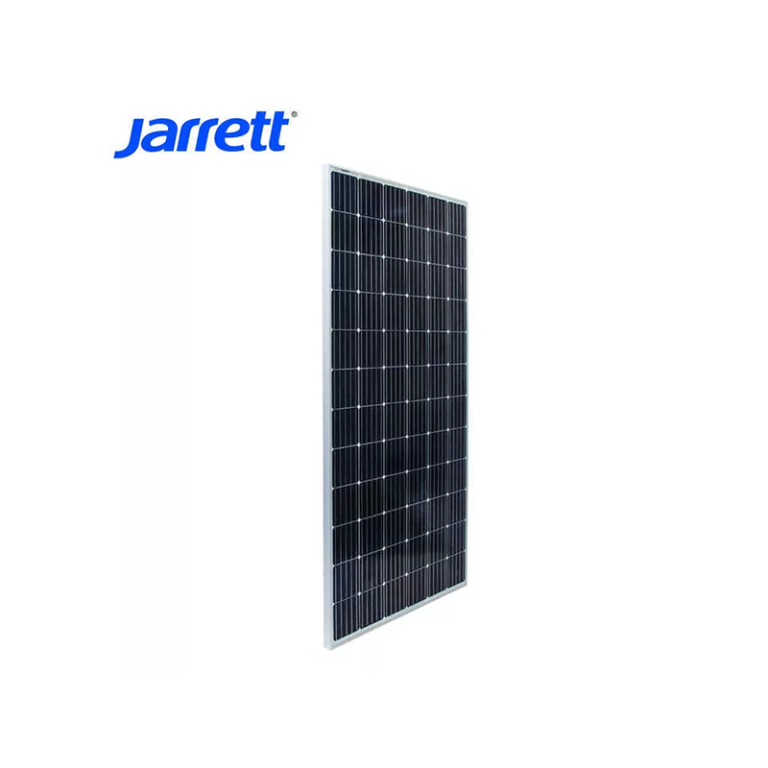
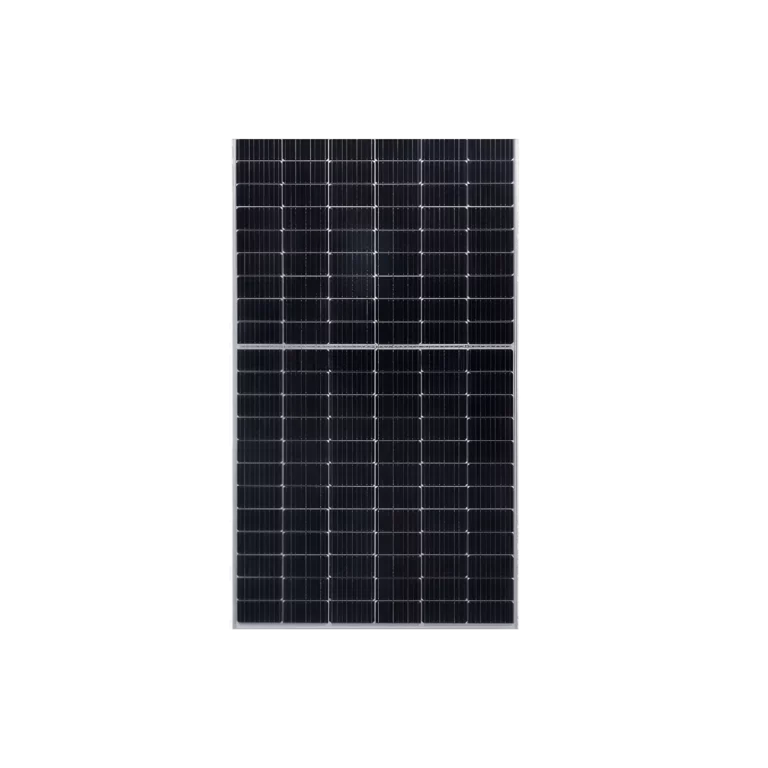
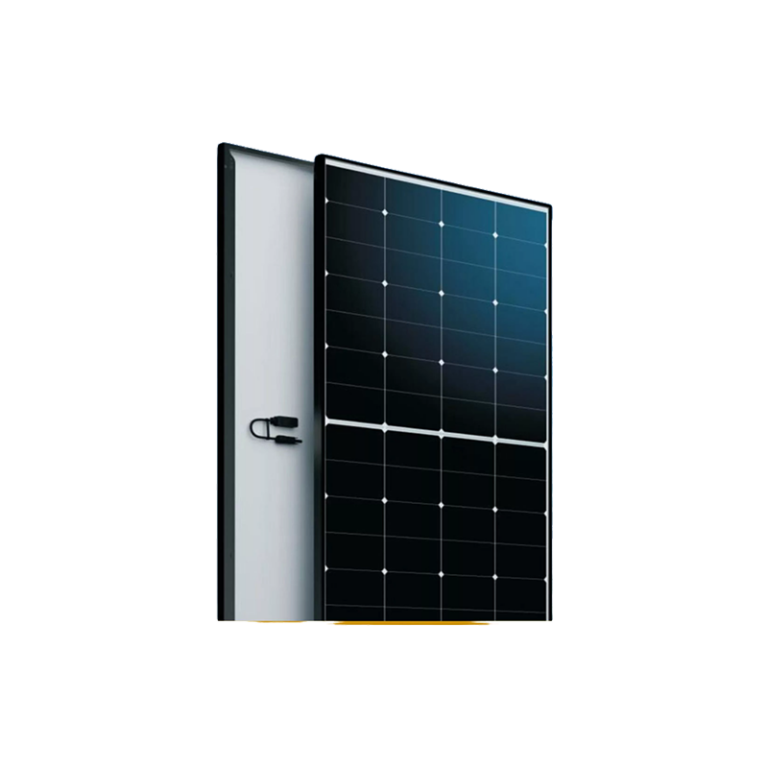
Jarrett’s module data carries two voltages per model. The JAR-100M reached 17.2 V at maximum power and 21.6 V with the circuit open. The JAR-200M reached 20.9 V and 25.08 V. Not one of those four figures read 12 V. At the smaller end, the small monocrystalline module range lists panels from 50 W to 350 W.
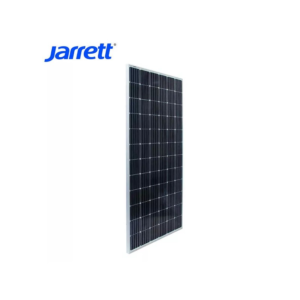
A silicon cell makes about half a volt. Thirty-six cells in series want about 18 V, and heat takes part of it back by early afternoon. A controller needs an input above bank voltage, so a panel pinned at 12 V stops charging once the afternoon arrives. Open-circuit voltage covers the winter end of the problem. A clear cold dawn pushes the array above rating, and the input at the far end has to hold.
Foldable Is Not Flexible
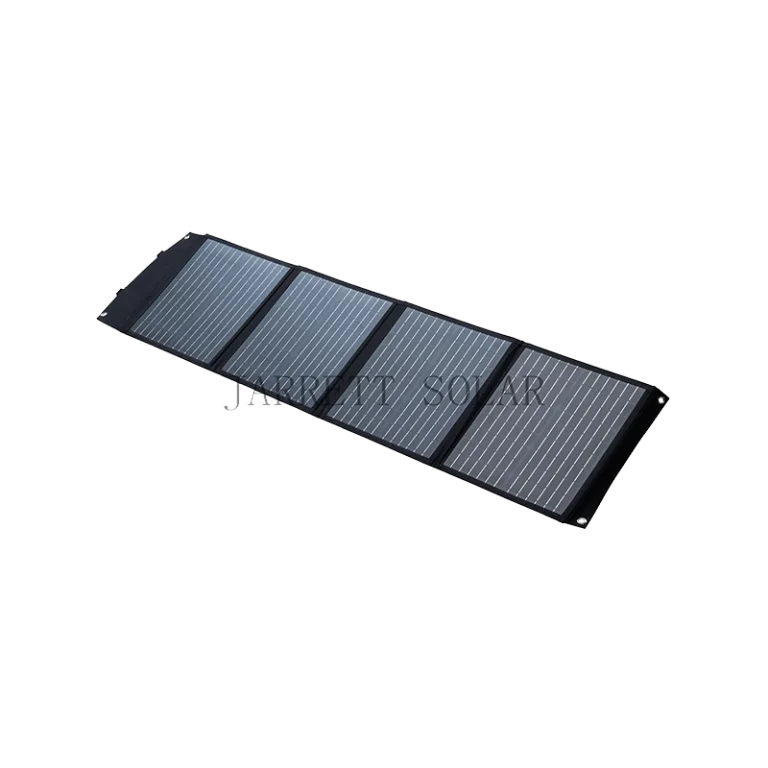
Flexible panels bend onto a van roof and stay put. Folding panels carry their laminates in a fabric frame. Hinges let the whole assembly travel flat, so a folding solar panel range built this way stands up at noon and packs into a vehicle before dark. The JAR series that Jarrett builds wraps monocrystalline cells in waterproof industrial-grade fabric, folds on a multi-fold frame with an integrated handle, and carries short-circuit and overload protection.
Folded size, unfolded area and weight follow the frame, not the wattage. Weight ends more backpack trips than output does, while a base camp can trade weight for area and hold a steeper angle in weak sun.
Matching Output to the Load
Devices on the Regulated Port
Phone, tablet, camera and power bank each landed on a socket. USB-A and USB-C took the first three, and a DC barrel socket took banks that wanted a barrel input. The adapters in the box decided whether the last group still worked on day two, when a socket needed a part nobody had packed.
Two checks settled the path. Every device matched a socket or an adapter that shipped with the panel. The socket rating then capped delivery, and it capped it long before panel wattage did.
Getting Charge into a 12 V Bank
Battery work moves onto the DC lead. The bank sets how long the load runs, the panel sets how fast the bank refills, and the refill rate follows the distance between array working voltage and bank voltage.
PWM clamps the array to bank voltage and drops the surplus. MPPT turns that surplus into current. Put the 20.9 V module on a 12 V bank and the distance is wide: MPPT returns current that PWM discards. Bring the two voltages close and the distance narrows, the recovered current narrows with it, and the simpler controller stops costing much. Jarrett supplies the MPPT controller series for that job.
Two limits decided whether the pairing shipped. Array open-circuit voltage stayed below the controller input ceiling, with the coldest morning in mind. Controller current rating carried array current with margin, because a controller pinned at its ceiling in strong sun runs hot and derates.
What to Confirm before an Order Ships
Twelve Rows to Request in Writing
The request carries twelve values. Electrical rows: maximum-power voltage, open-circuit voltage, rated watts with its test condition, socket ratings. Physical rows: cell type and count, fabric or laminate, folded dimensions, unfolded area, weight. Commercial rows: connector set with adapters, protection functions, packaging and carton quantity.
Most guides in this market stop at wattage, waterproofing and connector types. The two voltage rows decide whether the panels work on the customer’s bank, and those rows can be measured on arrival when a supplier will not document them. Send the load profile, site conditions and target capacity in the same enquiry. Jarrett’s design and support service covers consulting, system design, installation and after-sales support.
Bench Ratings and Field Output
A rating comes off a bench, at fixed irradiance and a fixed cell temperature. Delivery happens on a roof, a boat or a campsite, where angle, cloud, heat and propping set the number. Flat at noon in July, a panel lands under its rating. Low winter sun takes it far under.
Read array current and array voltage at the output on arrival. Compare the pair with the rating. Take a second reading at the angle and light the site uses.
Conclusion
Twelve volts names a system. Two voltages name a panel. Devices run on sockets, where the socket rating caps delivery and wattage adds nothing. Banks run on the DC lead. Maximum-power voltage starts the charge, open-circuit voltage keeps the receiving input alive, and the controller turns surplus voltage into current. Ask for both pairs of numbers. Check them against the ceilings at the far end of the cable. Measure the first delivery. Foldable solar panel wattage opens the comparison. Maximum-power voltage, open-circuit voltage, socket ratings and the connector set close it.
FAQs
Q1: Can a folding panel charge a 12 V battery directly?
A1: The USB socket cannot, because it holds a fixed low voltage for electronics. The DC lead can, through a controller rated above array open-circuit voltage and sized to array current.
Q2: What wattage should a folding panel carry for a portable power station?
A2: Read the input window before the wattage. Panel open-circuit voltage stays below the station’s maximum solar input, and panel current stays inside its input current limit. Recharge time then follows station capacity divided by charging power actually delivered.
Q3: Can two folding panels charge one bank faster?
A3: They can, once the receiving input allows it. Parallel connection keeps array voltage and adds current. Series connection raises voltage, so the open-circuit figure goes back to the same ceiling check. Send project requirement details to the manufacturer, and let the pairing check settle the arrangement.