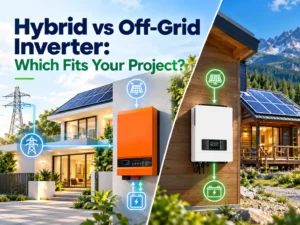
The choice between a hybrid vs off-grid inverter starts with the project interface, not the inverter label. Two sites can use the same inverter watts and still need different architectures. One may lose the grid for two hours a month; another may sit beyond the nearest connection and need several days of autonomy. Outage pattern, load profile, battery plan, and expansion path decide whether a hybrid inverter, an off grid inverter, or a hybrid solar inverter is the right starting point.
Start with source, autonomy, and simultaneous load. Those three inputs turn the equipment shortlist into a system decision instead of a product preference.
Start With the Grid Interface and Critical Loads
Is the Site Connected to a Reliable Utility Grid?
Grid reliability is the first dividing line. A hybrid system is designed around interaction with the utility, the solar array, and the battery. It can use grid power when solar production is low, charge batteries from an available source, and support selected loads when the grid fails, provided the complete system is designed for that operating mode. How well that works depends on voltage quality, outage frequency, and local interconnection rules.
Off-grid inverters enter the picture when dependable utility power is absent, or when the project deliberately avoids it. The inverter then has to form the local AC supply and coordinate solar charging, battery discharge, load demand, and generator input where applicable. This architecture removes dependence on the utility, but it also removes the grid as a buffer. Every kilowatt-hour required during poor weather or high demand has to come from the array, battery bank, generator, or another approved source.
The site condition is therefore not a small detail. A grid connection that is present but frequently unavailable can create a different design problem from a connection that is stable. Document outage frequency, voltage quality, connection capacity, and the rules that apply to backup or export operation before choosing an architecture.
What Must Stay Powered During an Outage?
The critical-load list defines how much the backup system must actually carry. A facility may need only communications equipment, lighting, security, and controls during an outage. A different facility may need refrigeration, pumps, motors, or production equipment to continue. They differ in runtime, starting behavior, and surge demand.
Classify loads as continuous, intermittent, or surge. Continuous demand sets the sustained inverter rating. Intermittent loads affect daily energy and battery size. Motors, compressors, and pumps can draw a large starting current for a short period, so their behavior may determine whether the chosen inverter can start the load without nuisance shutdown. The inverter rating, battery discharge capability, protection settings, and conductor sizing must agree with that load behavior.
The Jarrett product range includes off-grid hybrid inverter control units for residential, commercial, industrial, and remote-power projects. The exact operating mode and supported load still depend on the selected model and complete system design, so the project brief should identify which loads are essential, which can be deferred, and which must remain outside the backup boundary.
How the Two Architectures Handle Energy
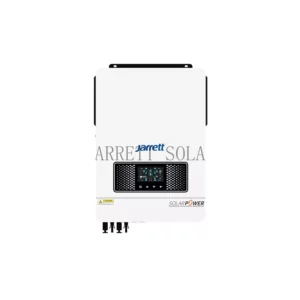
How a Hybrid Inverter Manages Grid, Solar, and Battery
A hybrid inverter acts as a coordination point for several energy paths. In normal operation, solar can serve loads, charge the battery, or exchange power with the grid within the permitted settings. During a grid disturbance, the inverter can transition to a backup mode for supported loads if the installation includes the required switching, protection, and battery capacity.
Flexibility alone does not create an independent microgrid. The system still depends on correct operating-mode selection, battery state, grid-code settings, and the boundaries of the backed-up circuit. A hybrid inverter may support backup, self-consumption, or grid interaction, but the actual project capability is defined by the complete design rather than the name on the inverter.
The best hybrid projects begin with a clear operating hierarchy. What should solar serve first? When should the battery charge or discharge? Which loads remain connected during an outage? What happens when the battery reaches its lower limit? These decisions should be documented before the equipment is ordered.
How an Off-Grid Inverter Forms an Independent System
An off grid inverter has to create and regulate the local power system. The array supplies energy when sunlight is available, the battery carries the system through gaps, and loads draw from the inverter. The design must balance daily energy, autonomy, recharge opportunity, peak demand, and source availability.
Independence changes the sizing logic. A hybrid project can sometimes use the grid to cover a shortfall. An off-grid project cannot assume that fallback. Battery capacity must cover the longest expected gap in solar input, while the array also has to restore the bank during normal operation. A generator can be part of the design, but fuel supply, start logic, and load transfer still need engineering.
This is why an off-grid decision needs more than a battery voltage and inverter wattage. The project must show how the system behaves across a normal day, a cloudy period, and a high-demand event.
Match Battery Autonomy to the Load
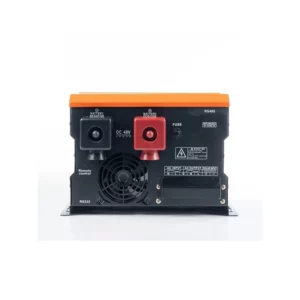
How Backup Duration Changes the Battery Requirement
Backup duration links inverter rating to battery energy. A 10 kW inverter cannot carry a 10 kW load for an arbitrary period unless the battery and source can deliver the energy. The battery must satisfy both instantaneous power and stored energy requirements, and its usable capacity may be lower than the nameplate value under the selected operating conditions.
Start with the kWh required during the backup window, then check the inverter’s DC input range, continuous discharge capability, surge capability, and communication requirements. Voltage matters, but it is only one part of compatibility. Current limits, protection settings, cable sizing, and temperature conditions can change the result.
When phase-two growth is plausible, plan the battery architecture alongside the inverter. A system that can accept additional modules may offer a cleaner growth path than replacing the inverter or rebuilding the DC side. A practical choice keeps the first phase workable without closing off the next stage.
Which Loads Need More Starting Power?
Motor-driven loads often decide the actual inverter class. A pump, compressor, refrigeration unit, or workshop machine may have a running rating that appears modest while its startup demand is much higher. If several motor loads can start at the same time, the combined surge becomes the design case.
A load schedule should record running watts, starting behavior, duty cycle, and operating window for each important device. The project team can then compare that schedule with the inverter’s continuous and surge ratings and verify that the battery can supply the required current. A larger inverter alone is not a complete answer if the battery, wiring, or protection cannot support the demand.
The off-grid hybrid inverter control units are documented for demanding applications that include inductive loads and remote operating conditions. The model and configuration still determine the actual limits; the load schedule is what turns those documents into a project decision.
Evaluate Expansion, Control, and Project Support
What Changes If the Project Expands Later?
A second building, more refrigeration, a larger pump, or an added battery bank can push the project beyond its first load profile. A hybrid design may benefit from the grid as a backup for a growing load, while an off-grid design may need more array capacity, battery capacity, or generation support.
Review expansion at three levels: AC output, DC input and battery current, and physical space. The inverter should have a credible path for the expected growth, but oversized equipment can also increase cost and stand-by consumption. The practical target is not maximum size; it is enough headroom for the project’s realistic next stage.
A project design and integration service can review the load schedule, battery plan, site conditions, and equipment configuration together. That system view is especially useful when the first phase is small but the project brief already identifies a second phase.
Which Operating Risks Need Verification?
Before selecting either inverter, verify the local connection and safety requirements, equipment compatibility, battery operating limits, ventilation or enclosure conditions, protection coordination, and the responsibility for commissioning. A hybrid inverter may require approval or settings related to grid interaction. An off grid inverter may require additional attention to source availability, generator coordination, and load shedding.
Trace the inverter rating, battery limits, protection settings, and operating modes to the approved design. That paper trail matters more than a generic claim that one architecture is better.
Conclusion
Hybrid and off-grid inverters solve different system problems. Choose hybrid when a reliable grid connection can remain part of the energy strategy and the project needs coordinated solar, battery, and backup operation. Choose off grid when independence is the actual requirement and the battery, array, and source plan can support the full operating cycle. In both cases, the correct decision comes from the site interface, critical loads, autonomy target, expansion plan, and verified equipment compatibility. Send the load schedule, grid condition, battery objective, and target commissioning window to Jarrett for an architecture review against the real operating cycle.
FAQs
Q1: Which is better, a hybrid inverter or an off-grid inverter?
A1: Neither is universally better. A hybrid inverter fits projects that can use the grid as part of the energy strategy and need coordinated backup. An off-grid inverter fits projects designed to operate independently. The site connection, load profile, battery autonomy, and operating rules decide which architecture is appropriate.
Q2: Can a hybrid inverter work without the utility grid?
A2: Some hybrid systems can operate in backup or off-grid mode for supported loads, but the capability depends on the inverter model, battery, switching configuration, protection, and approved design. The project must verify the exact operating mode rather than assuming that every hybrid inverter is fully independent.
Q3: What should be checked before choosing either inverter?
A3: Confirm the critical-load list, starting requirements, required backup duration, battery voltage and current limits, inverter input and output range, protection settings, expansion plan, local connection rules, and commissioning responsibility. Confirm those inputs as one coordinated design before ordering equipment.